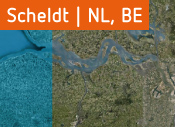
The Scheldt river estuary is shared between the Netherlands and Belgium (Flanders). Consequently, management challenges in the Scheldt have in large part stemmed from the cross-border nature of the management activities. In past years, the Netherlands and Flanders have negotiated the main policy topics concerning the estuary but many disputes have arisen. In the Netherlands, the main focus has been on nature protection, whereas in Flanders there has been large pressure to deepen the fairway to the port of Antwerp. This channel enlargement has been an important source of conflict between both countries.
From a nature conservation standpoint, land reclamation and the straightening of dykes has led to a substantial reduction in salt marsh and backwater areas in the estuary. Water quality is moderate to bad, although improvements have been made in recent years. This is a result of untreated domestic wastewater, industrial pollution with heavy metals and organic micropollutants and extensive nutrient load from agricultural sources.
Flooding is also an issue of concern in the Scheldt and this risk is only expected to increase in the future due to sea level rise caused by climate change.
challenges faced by the scheldt estuary
As of November 2013 this website is no longer being updated.